Solitaire - 2026
- 4.4
- Rating
- 5.00M
- Installs
- Free
- Price
 Analysis by App-foxy
I approached Solitaire - 2026 as the kind of card game I could open for a few quiet minutes, rather than something demanding a long session or a complicated tutorial. That expectation fits it well. Developed by Evergreen MLJ, this free card game keeps its focus on classic solitaire play, with a simple presentation that makes the first deal easy to understand. It is rated for Everyone, runs on Android 7.0 or later, and the current version is 1.2.9.
What I like most is how quickly the game gets out of the way. I do not need to learn a new card system before playing, and I can begin with the familiar task of arranging cards into descending sequences while building the suits upward. That makes it a natural choice for a short break, a quiet evening, or anyone who enjoys traditional solitaire without turning it into a large, feature-heavy experience.
How the first few games establish a rhythm
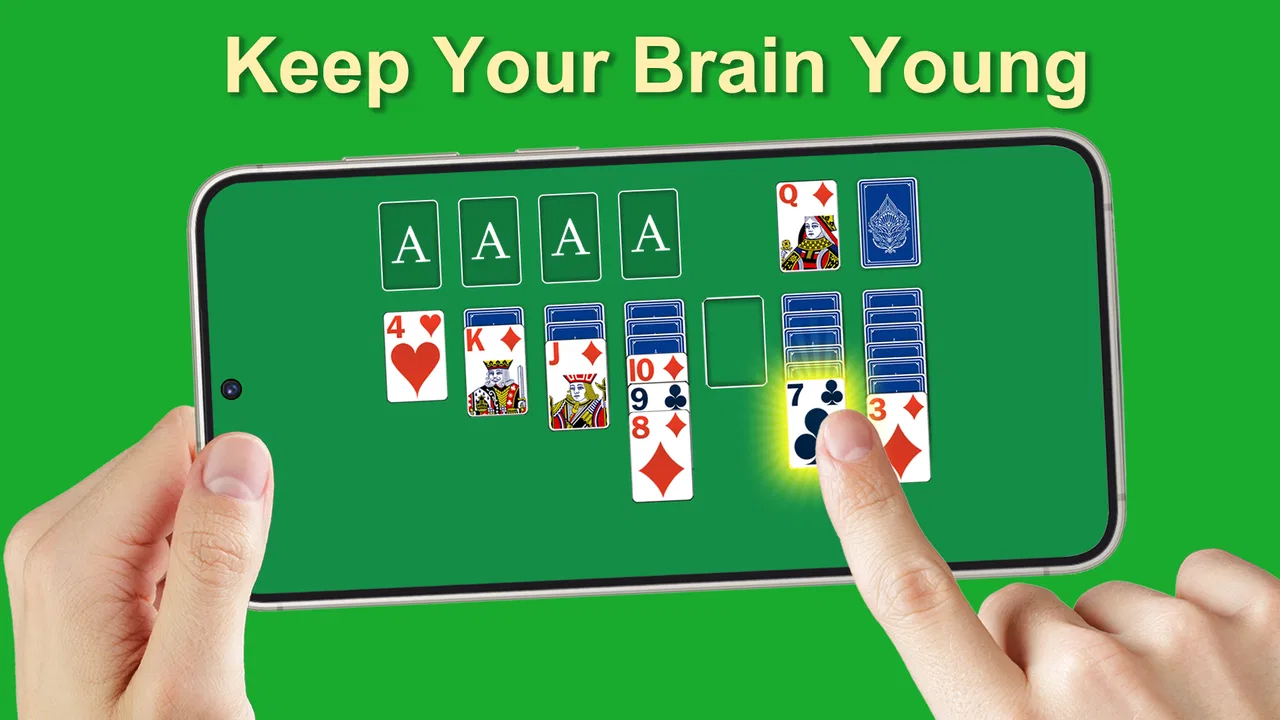
The early goal is clear from the opening deal: expose hidden cards, create useful sequences, and move cards toward the suit foundations when the position allows it. I found that this gives each round a small sense of purpose even when I am only playing casually. The board presents an immediate puzzle, but the rules remain familiar enough that the game does not feel like work.
You May Also Like

 Blood Strike: 2.5 Anniversary
Blood Strike’s Loadouts Turn Every Drop Into a Tactical Gamble
A close look at Blood Strike’s custom loadouts: how fast access to signature weapons reshapes its battle royale rhythm, rewards preparation, and narrows the gap between fights.

 Pandora - Music & Podcasts
Pandora’s Music Is Easy to Start, but Harder to Recover
Pandora’s strength is its low-effort path from a seed to a station. Its weak spot is how much confidence it asks you to place in connection, setup, and quiet recovery.

 8 Ball Pool
 Is Built on Rivalries, Rematches, and Routine
A close look at the rivalries, rematches, shared routines, and unanswered safety questions that turn a quick pool match into a persistent mobile community.

 Samsung Music
’s Quiet Strength Is Playing What You Already Own
Its reach comes less from spectacle than from dependable access to a personal library. That simplicity is both the app’s strongest retention engine and its ceiling.

 AccuWeather: Weather Radar
AccuWeather Review: A Quick, Clear Forecast for Everyday Decisions
For everyday plans, the best forecast is the one you can understand quickly. AccuWeather makes rain timing, radar, and local conditions easy to act on, with a few trade-offs.

 Hill Climb Racing
Why Hill Climb Racing Still Turns Crashes Into One More Run
A tiny car, a bumpy hill and one more upgrade: Hill Climb Racing keeps resurfacing because its simple chaos makes every near-miss feel personal.
More From Our News Desk



That clarity matters on a phone. Solitaire can become frustrating when controls are uncertain or when the screen is crowded with unnecessary choices. Here, the basic appeal comes from being able to concentrate on the cards themselves. I can look for an available move, make it, and reassess the board without having to manage a separate progression system before enjoying the core game.
For a newcomer, the first useful habit is to avoid moving every available card immediately. I get better results when I first check whether a move will reveal a face-down card or open a column. A legal move is not always a helpful move, and that distinction gives the opening stages more thought than the relaxed presentation might suggest.
The game works particularly well for people who already know classic solitaire. A returning player can settle in immediately, while someone unfamiliar with the format may need a little time to understand why exposing hidden cards is often more valuable than simply building a visible sequence. Once that idea clicks, the early rounds become pleasantly readable.
Progress you can feel without a complicated reward track
The most convincing progress signal is the changing board. Every revealed card gives me more information, and every completed foundation reduces the number of decisions left in the round. That is a modest form of progression, but it suits this type of game. I do not need a badge or a dramatic unlock to notice that a difficult layout is becoming manageable.
This also means the game’s satisfaction comes from improving my decisions rather than collecting permanent rewards. When I replay after making a poor choice, I can often identify the moment where I used a useful card too early or blocked a column unnecessarily. That makes the experience more reflective than a purely automatic card mover.
One practical tip is to treat empty columns as valuable space instead of filling them as soon as possible. An open column can give a long sequence somewhere to move, but using that space carelessly may remove flexibility later. I also try to keep an eye on cards that can be moved between columns, because a move that looks small may be the key to exposing the next hidden card.
The lack of a visible long-term progression path will be either a strength or a weakness depending on what you want. I appreciate not being pushed through artificial tasks before I can play. On the other hand, players who expect collections, unlockable themes, missions, or a growing campaign may find the experience too static. The board changes from deal to deal, but the larger structure stays focused on solitaire itself.
Difficulty comes from decisions, not noisy pressure
The difficulty curve feels natural because it is created by the layout and by the order in which cards become available. Early decisions are usually easy to read, but later choices can become much tighter. I may have several legal moves while only one preserves enough flexibility to finish the round. That is where the game becomes more than a way to pass time.
I would not describe the challenge as aggressive. The overall tone remains calm, and the game is suitable for players who prefer a measured puzzle over fast reactions. Still, a relaxed pace does not mean every deal will be simple. A careless sequence of moves can leave me with blocked columns and no useful way forward, especially when I focus too much on building one area of the board.
My best approach is to delay irreversible-looking choices until I have checked the available cards in the stock and tableau. I also avoid assuming that the longest visible sequence is automatically the best one to move. Sometimes a shorter move exposes a hidden card and creates more options, while a larger move only makes the layout look tidier.
This is one area where Solitaire - 2026 compares favorably with more elaborate card games. It does not need timed rounds, opponents, or elaborate effects to create tension. The pressure comes from limited space and incomplete information. Compared with a competitive solitaire app, it feels less demanding and less distracting. Compared with a very basic offline card utility, it offers a more game-like sense of making progress through each individual deal.
There is also a trade-off. Players who enjoy a sharply escalating challenge may want a title built around ranked levels, daily targets, or explicit difficulty settings. This game is better for a steady, familiar puzzle loop than for a structured test of mastery. Its challenge is present, but it is not presented as a competitive ladder.
Why the pacing works for short sessions
The pacing is one of the strongest reasons I would recommend it to a casual player. I can play one deal during a coffee break, stop after a few moves, and return without needing to remember a complicated story or a large set of objectives. The card layout itself tells me what needs attention when I come back.
A realistic everyday use is a short wait at a station or a few minutes before bed. In that situation, I do not necessarily want an online match that may run longer than expected. I want something I can start immediately and leave when necessary. A solitaire deal fits that purpose because the commitment is contained within the board in front of me.
The same quality may feel limiting during a longer gaming session. After several rounds, the repeated structure can become predictable. Because the main attraction is the classic card puzzle, the experience does not constantly introduce new rules to refresh the session. I tend to enjoy it most when I treat it as a small mental break rather than my only game.
I also think the calm pacing helps players who dislike reflex-based mobile games. There is no need to tap quickly or memorize a large interface. I can pause to compare two possible moves and think through the consequences. That makes it approachable for older players, first-time mobile card players, and anyone who prefers concentration without spectacle.
At the same time, people who want social competition should look elsewhere. A multiplayer card app would be a better fit for live matches, opponents, and visible rankings. This game’s appeal is private and self-contained: the satisfaction comes from reading the layout and completing the foundations, not from proving that I am faster than another player.
Retention without turning every session into a chore
The game encourages return visits through the basic appeal of another deal. That may sound simple, but it is appropriate here. I often come back because I want to see whether I can make better choices than I did in the previous round, not because I am being pushed by a chain of mandatory tasks.
That approach creates gentle retention rather than heavy retention pressure. I can stop after a single game without feeling that I have lost a reward window or fallen behind. For me, that is a meaningful advantage over mobile games that fill every session with timers, currencies, and notifications. The experience remains easy to fit around real life.
The other side is that the app may not hold players who need a strong external reason to return. Without a clearly emphasized campaign or collection chase, motivation depends on whether the core solitaire loop continues to feel satisfying. If I am already tired of classic solitaire, a clean presentation alone will not completely change that.
One useful way to keep the game fresh is to change the way I evaluate a round. Instead of only asking whether I won, I can focus on whether I exposed hidden cards efficiently, preserved open columns, or avoided using a needed card too early. These personal targets create extra depth without pretending that the game has a larger progression system than it does.
The audience numbers suggest that the format has broad appeal: the game has an average rating of 4.4 from around twenty-three thousand ratings, with more than five million installs and roughly seventeen hundred written reviews. I see those figures as evidence of a substantial audience for this straightforward style, though they do not replace my own judgment about whether the classic rules are enough for you.
Where it fits among familiar solitaire alternatives
Compared with a traditional desktop solitaire program, this mobile version is better suited to quick touch-based sessions. I can pick it up without setting aside a full block of time. Compared with a feature-packed mobile card suite, it is easier to understand because the central activity is not buried beneath several modes or layers of customization.
That simplicity is also the main limitation. If your favorite solitaire app includes extensive statistics, elaborate visual themes, daily challenges, or a competitive community, you may find this one less rewarding over time. I would choose it for direct access to a familiar puzzle, not for a broad platform of card-related activities.
It is free, which lowers the barrier to trying it. The Everyone content rating also makes it suitable for a wide audience, including families looking for a quiet card game rather than an action title. I still recommend checking whether the presentation and control style feel comfortable on your particular screen, especially if you prefer larger cards or highly configurable interfaces.
The Android requirement is also modest by current standards, since it supports devices running version 7.0 or newer. That makes it a practical candidate for an older phone or tablet that cannot run some newer games. The current release, 1.2.9, is the version I would look for when installing, because staying current is generally the sensible way to receive the developer’s latest adjustments.
Who should play it, and who should skip it
I would recommend this game to someone who wants a familiar card puzzle with a low learning curve, a calm pace, and no need to compete with other players. It is especially suitable for short breaks, casual evening play, and people who enjoy improving their choices from one deal to the next.
I would be more hesitant to recommend it to a player who needs constant novelty. If you want a campaign, character progression, ranked matches, or a large selection of card variants, a broader card-game app will probably serve you better. The same is true if you only enjoy solitaire when it includes detailed performance tracking or strong daily objectives.
It is also not the right choice if you are looking for a game that demands fast reactions. The challenge here is mainly about planning and recognizing opportunities. That is relaxing for me, but players who prefer speed, spectacle, or direct competition may experience the same calm design as a lack of excitement.
My verdict on its long-term appeal
Solitaire - 2026 succeeds because it understands the value of a focused card game. The early goals are immediately readable, the board provides its own progress signals, and the difficulty grows through decisions rather than artificial pressure. I can play casually, yet still find meaningful mistakes to learn from when a deal goes wrong.
Its retention is gentle. I return for another puzzle because the format is convenient and familiar, not because the game overwhelms me with obligations. That makes it a good companion for small pockets of time, although it also means the experience may feel limited to players who expect a deep progression structure.
My overall recommendation is simple: choose it if you want classic solitaire kept approachable and uncluttered. Evergreen MLJ has made a free card game that is easy to start, broadly accessible, and capable of offering more thought than its relaxed appearance suggests. I would not treat it as a replacement for a competitive or feature-rich solitaire suite, but as a dependable everyday puzzle, Solitaire - 2026 earns its place on my phone.
FAQs for Solitaire - 2026
01What are the main features of Solitaire - 2026?
Solitaire - 2026 offers a modern twist on the classic card game, featuring daily challenges, customizable card designs, and various difficulty levels. It also includes an intuitive interface that is easy to navigate, making it accessible for both beginners and seasoned players. Additionally, the game supports offline play, so you can enjoy it anytime, anywhere.
02Is Solitaire - 2026 free to play, or are there in-app purchases?
Solitaire - 2026 is free to download and play, but it includes optional in-app purchases. These purchases can enhance your gaming experience by providing access to additional card designs and hints. While the game is fully playable without spending money, these extras can add variety and help with difficult levels.
03Does Solitaire - 2026 require an internet connection to play?
No, Solitaire - 2026 does not require an internet connection to play. You can enjoy the game offline, making it a perfect companion for commutes or travel. However, an internet connection might be needed for downloading updates and accessing leaderboards or daily challenges.
04How does Solitaire - 2026 ensure user privacy and data security?
Solitaire - 2026 takes user privacy seriously. The app requests minimal permissions and adheres to strict data protection standards. Your gameplay data is stored securely, and personal information is never shared with third parties without consent. Always check the app's privacy policy for detailed information on data handling practices.
05What should I do if I encounter issues or bugs while playing Solitaire - 2026?
If you encounter any issues or bugs while playing Solitaire - 2026, you can contact the support team through the app's help section. They are responsive and committed to resolving problems quickly. Additionally, ensure you have the latest version of the app, as updates often fix known issues.
Pros
- Intuitive user interface for easy navigation.
- Daily challenges keep gameplay fresh.
- Customizable themes for personal touch.
- Offline mode available for on-the-go play.
- Light on battery
- ideal for long sessions.
Cons
- Limited hints can be frustrating for beginners.
- Ads can be intrusive during gameplay.
- No multiplayer mode for social interaction.
- In-app purchases can be pricey.
- Occasional crashes on older devices.

Solitaire - 2026
Gallery